The 10 Most Influential SNES Games Ever Made
They may not necessarily be the best, but they influenced gaming for years to come.
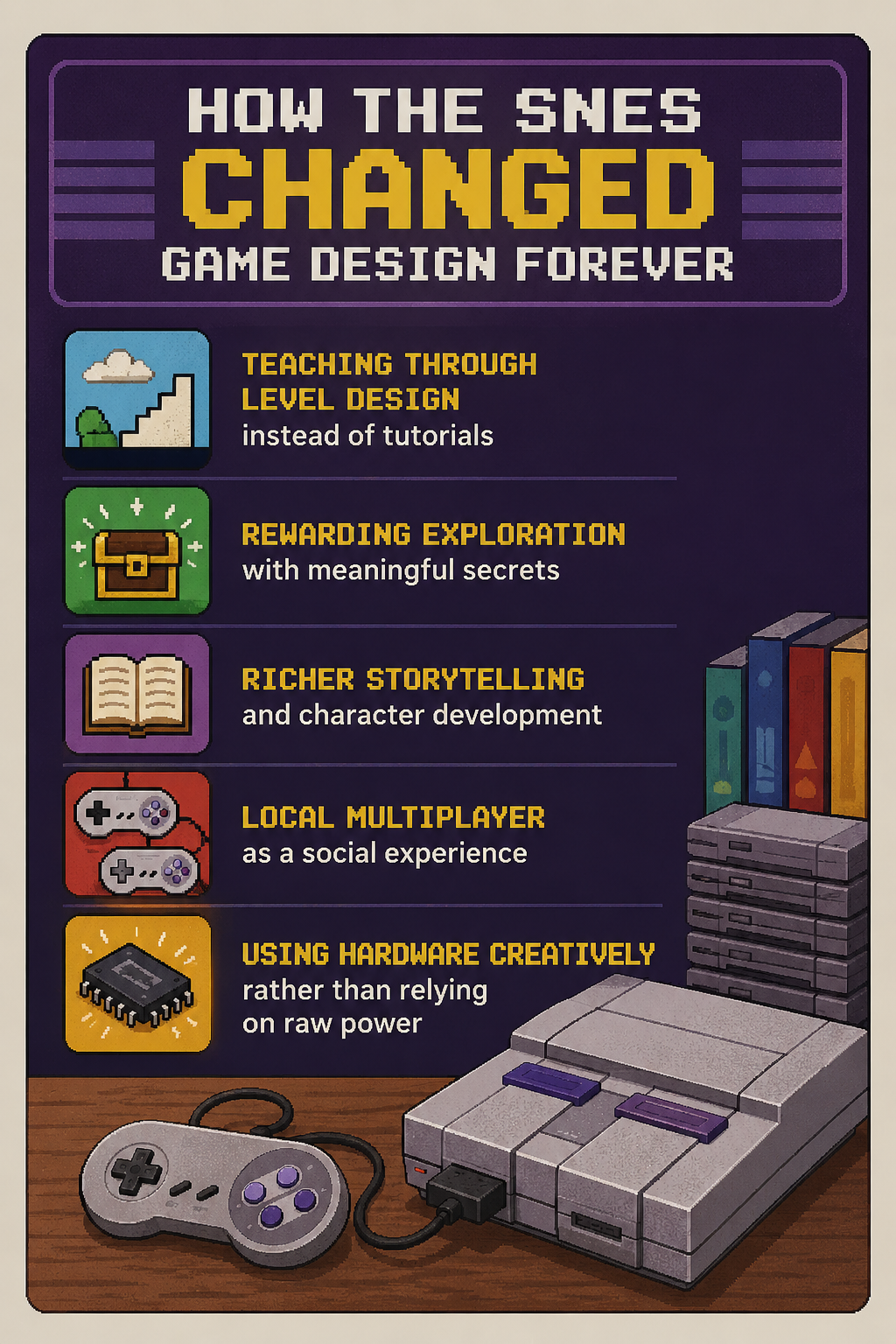
Released in North America in 1991, the Super Nintendo Entertainment System wasn’t just home to great games. It quickly launched one of the industry’s most influential creative periods, where game developers learned how to tell richer stories, refine genres, and push 16-bit hardware beyond expectations. Many modern games still borrow ideas that were pioneered during the SNES era. Today at Respawn Magazine, we’re counting down the top 10 most influential SNES games ever made.
We’re not just talking about which game is the most fun. We’re talking about which games permanently changed game design, genres, or the industry. So what are the 10 most influential SNES games ever made? Here’s our list.
Star Fox: The Game That Changed Console Graphics
The original Star Fox for the SNES has a loyal fandom for good reason – it’s more than just a great game. Rather, Star Fox changed expectations for what console graphics could achieve. It was one of the first games to make use of the Super FX chip, which Argonaut Games developed specifically for Star Fox in order to facilitate 3D gameplay and demonstrate the SNES’ superior polygon rendering capabilities.
Star Fox brought real-time polygon graphics to a mass-market audience, and it was the first game to feature a hardware enhancement cartridge. That is to say, the Star Fox cartridge featured Nintendo’s very first Super NES enhancement chip. This enhancement chip enabled better graphics than was available on a standard SNES, giving players the ability to play games with superior graphics without having to upgrade their console.
Secret of Mana: Making Cooperative RPGs Work
The cooperative RPG has come a long way over the past several decades. But cooperative role-playing games like World of Warcraft owe much of their success to Secret of Mana, a 1993 action role-playing game for the Super Nintendo.
Secret of Mana introduced seamless action combat to the RPG genre, and it was also the first game to feature three-player cooperative play. It was the first RPG to enable real-time combat instead of turn-based combat, while its unique Ring Command menu system enabled players to pause the game and make decisions in the middle of battle.
The game’s cooperative gaming system was also unique in that it enabled a second or third player to enter and exit the game at any time, rather than having to start the game with additional players. As a result, Secret of Mana helped to popularize seamless cooperative action RPGs on consoles. Secret of Mana’s legacy is still visible today in action RPG designs and local co-op experiences.
Super Mario Kart: Perfecting the Kart Racer
To say that Super Mario Kart was influential would be an understatement. This game was the first to introduce character-based racing, where different characters had different attributes that determined their acceleration ability, top speed, and sturdiness. It also popularized item mechanics in racing games, giving players the ability to use items – or throw items at opponents.
The game’s Battle Mode was an innovative add, as it gave players a different way to engage with the game and each other. Super Mario Kart’s legacy is hard to deny: It originated the entire kart racing genre, and countless imitators have since tried to recapture its original magic.
EarthBound: Proving RPGs Can Be Weird
EarthBound is a fan favourite SNES game for good reason. Its modern-day setting resonated well with players, and the game’s offbeat humour gave it a unique charm among RPGs. There was also a great deal of emotion-oriented storytelling to engage players, and even despite the game’s poor sales, it still enjoys a cult following to this day. The game’s surreal writing and ordinary suburban setting also gave it a personality that hasn’t been replicated since.
EarthBound’s influence is still visible today in indie RPGs like Undertale.
Super Mario World: Perfecting 2D Platforming
Super Mario World was the ideal platformer of its time, and its influence can still be seen in platformers today. Modern Nintendo platformers still use its level design methods, and the game’s emphasis on secrets and exploration have given way to a genre of exploration games that teach through design.
Super Mario World also helped popularize secret exits, an interconnected overworld, invisible teaching through level design, and momentum-based platforming.
Final Fantasy VI: The Moment RPG Stories Grew Up
RPG stories traditionally focused on small casts and accessible themes for young gamers (like EarthBound).
But Final Fantasy VI was the game that demonstrated how sophisticated storytelling could work within a console RPG. The game’s ensemble cast, mature themes, operatic sequence, and the villain who actually wins all make for a game aimed at mature players. This game’s legacy on game design is undeniable; it helped popularize cinematic storytelling (like we see in Breath of the Wild) and character-driven RPGs.
Chrono Trigger: Showing RPGs Could Respect Players’ Time
Chrono Trigger is a beloved fan favourite RPG for the SNES. The game’s multiple endings gave it a great deal of replayability, as did the New Game+ feature that enabled players to keep items from previous playthroughs. This game’s fast pacing and collaborative “dream team” approach were innovative for the era, giving players a rich world to dive into without requiring them to spend hundreds of hours grinding for meaningless achievements.
Chrono Trigger also helped redefine the notion of replayability that we see in modern games.
Super Metroid: Building the Blueprint for Exploration
Super Metroid was the first major SNES game to focus on exploration as a core theme. The game’s environmental storytelling and ability-gated progression encouraged players to explore the environment in a non-linear fashion rather than simply focusing on the next objective. And with minimal dialogue, it ensured players could immerse themselves in that environment.
This game’s legacy is easily found in the entire Metroidvania genre, including indie exploration games like Hollow Knight.
A Link to the Past: Creating the Modern Zelda Formula
The Legend of Zelda: A Link to the Past has seen so many re-releases for good reason: it’s a classic. This game is responsible for establishing the formula we see in modern Zelda games, with its dungeon progression and puzzle design innovating on what was previously possible in a Zelda game.
The other major advancement in A Link to the Past was the game’s mechanic of items unlocking exploration, a unique and interesting way to gate areas until the player was ready to face them. This game’s legacy is undeniable: Nearly every 2D Zelda game repurposes aspects of A Link to the Past.
Donkey Kong Country: Redefining What Players Expected from Console Graphics
Donkey Kong Country is #1 on our list of the most influential SNES games ever made. Why?
First of all, the game’s SGI-rendered graphics stunned audiences at the time, which helped extend the SNES’ lifespan against newer hardware. The game was also a massive commercial success, selling six million copies worldwide in its first holiday season. Plus, the game proved that presentation could become a system seller, and it influenced visual expectations across the industry.
This game’s legacy can be found in the pre-rendered graphics boom, where hardware makers and third-party studios collaborated more closely together to raise the quality of graphics. As a result of Donkey Kong Country, production value expectations went way up.
Many of the games on this list didn’t merely launch franchises – they established conventions that still shape game development to this day. Their influence extends beyond Nintendo, inspiring developers across genres and generations. The SNES remains one of gaming’s most creatively important platforms because so many of its biggest hits became blueprints for the future.